Saffron is one of the most misunderstood ingredients in modern kitchens. Often judged by how red it looks or how cheaply it can be bought, true saffron is less about appearance and more about origin, handling, and time.
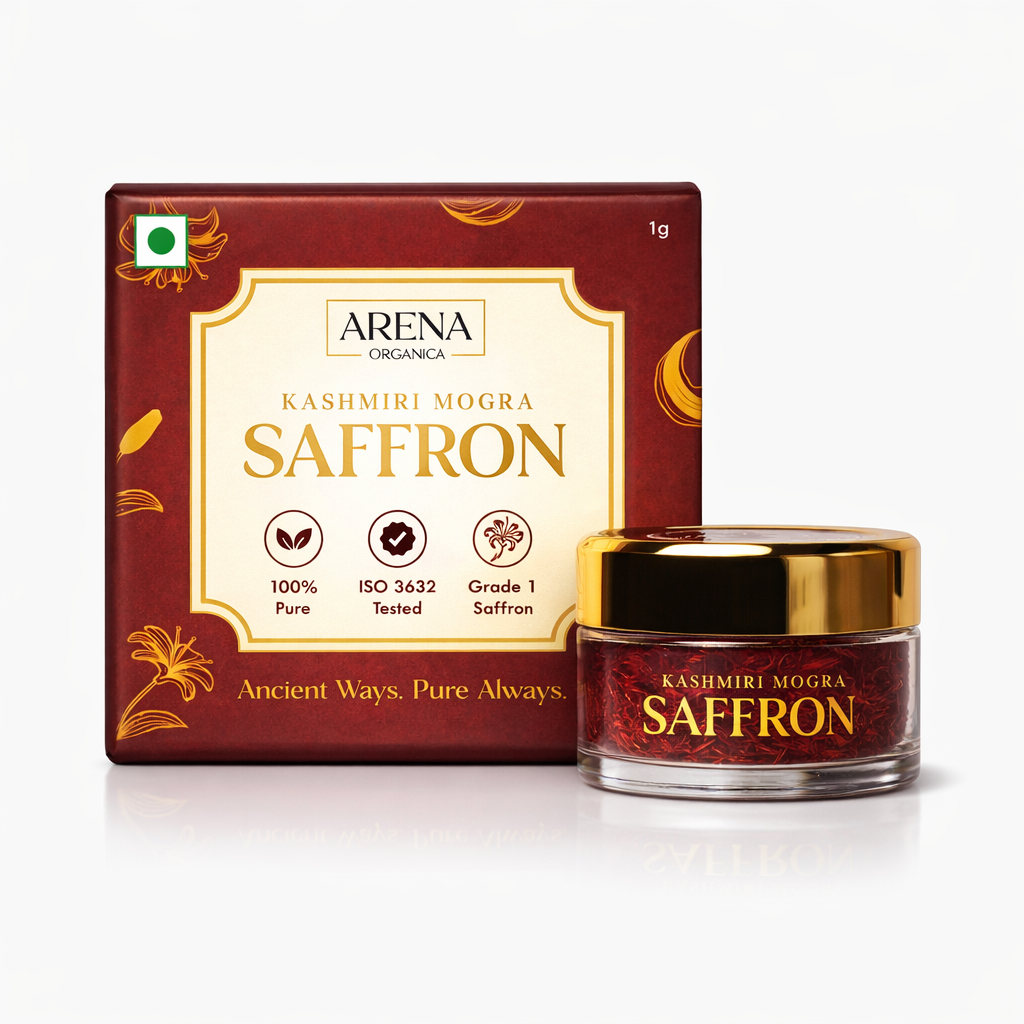
At Arena Organica, saffron is not treated as a commodity. It is treated as a crop that demands patience, restraint, and respect.
Where real saffron begins
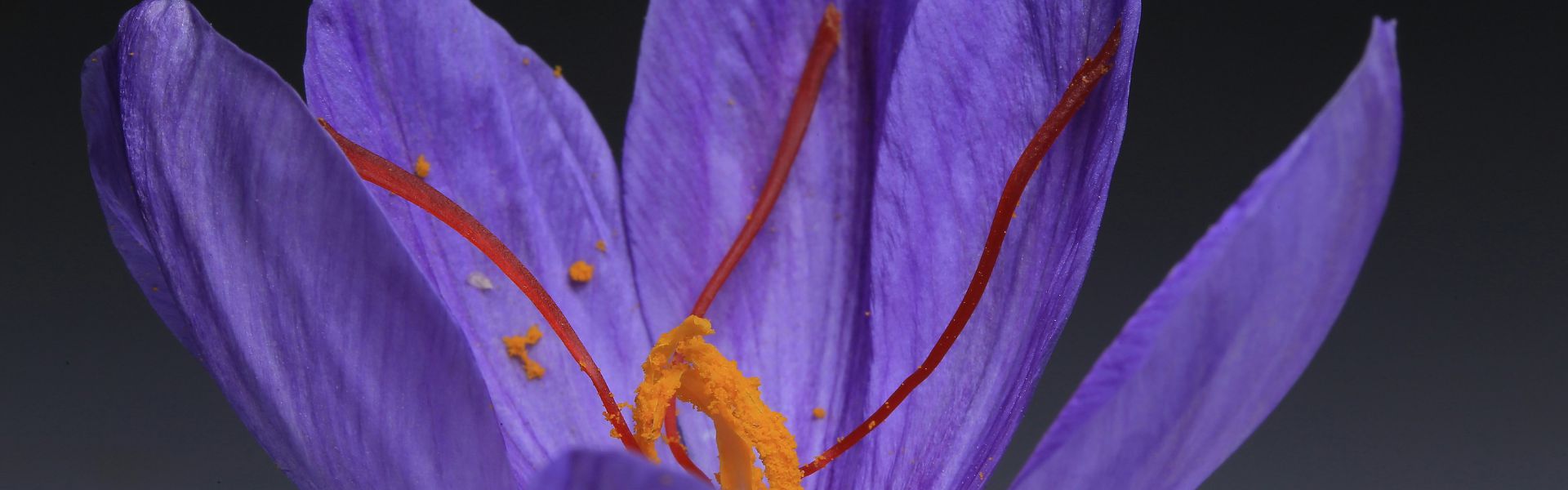
Saffron comes from the dried stigmas of the Crocus sativus flower. Each flower blooms briefly and must be harvested by hand. This process cannot be rushed or mechanised without compromising quality.
The farms we work with grow saffron in limited quantities, following natural farming practices and seasonal rhythms. Harvesting is done carefully, and drying happens slowly to preserve aroma and colour.
Why pure saffron releases yellow, not red
A common misconception is that darker red saffron is superior. In reality, when pure saffron is soaked, it releases a rich golden-yellow colour. Artificially enhanced or dyed saffron often looks deep red but lacks aroma and depth.
Colour variation between batches is natural. It reflects differences in climate, soil, and harvest timing — not inconsistency or dilution.
Aroma as the real indicator
True saffron announces itself through aroma. It is complex, slightly earthy, and unmistakable. If saffron has little or no smell, it is often old, over-processed, or adulterated.
This is why we prioritise careful drying and small-batch handling over scale.
Why patience costs more — and matters
Saffron is expensive not because it is rare, but because it is slow. Slow to grow, slow to harvest, slow to prepare.
When you choose saffron grown with restraint, you are choosing a process that values integrity over volume — and flavour over appearance.
Closing note
Saffron is not meant to be loud or flashy.
It is meant to be honest.
And honesty, in farming, always takes time.